Why Proper Running Technique Matters + Running Secrets That Work
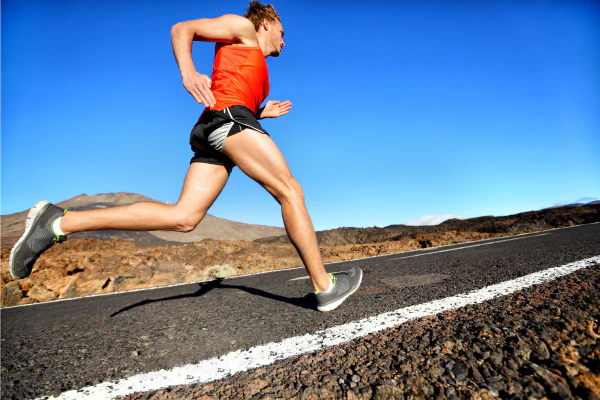
Most runners focus on miles and shoes. Fewer focus on how they move. Research shows targeted “gait retraining”—coaching your form with feedback—can shift load away from irritated tissues, reduce pain, and keep you running. Below are the biggest, evidence‑backed levers, plus easy ways to test them yourself. When you’re ready for tailored guidance, book a Running/Sports Assessment with our Doctors of Physical Therapy in Epping or Stratham, NH.
The Science of Running (Backed by Studies)
1) Cadence (step rate): add ~5–10%
Increasing step rate slightly—without speeding up—shortens each stride and reduces braking forces and energy absorbed at the knee/hip. Lab work shows a 5–10% increase in step rate reduces joint loading; a 2022 systematic review backs cadence changes as a reliable way to shift loads. In runners with patellofemoral pain (PFP), cadence‑based retraining improved pain and function in randomized trials.
Key studies: Heiderscheit et al., 2011; Anderson et al., 2022; de Souza Júnior et al., 2024.
2) Forward trunk lean: a small tilt eases knee stress
A slight forward lean (from the ankles, not the waist) can lower patellofemoral joint stress in controlled experiments—useful if kneecap pain limits you.
Key studies: Teng & Powers, 2014; follow‑up work shows similar effects in uneven/decline conditions.
3) Foot‑strike pattern: knee vs. calf/Achilles trade‑offs
Forefoot striking tends to reduce knee loading but increase demand on the calf–Achilles. If your knee is the limiter, it can help; if you’ve had Achilles issues, proceed carefully and strengthen. Your shoes selection can also change where your body feels stress.
Key studies: Kulmala et al., 2013; meta‑analyses and newer work confirm the redistribution of stress.
4) Step width: avoid the “tightrope”
Very narrow, cross‑over steps can increase modeled iliotibial band (ITB) strain. A modestly wider step reduces ITB strain/strain rate in simulations and lowers some frontal‑plane loads. Weak muscles can lead to this undesirable running style.
Key studies: Meardon et al., 2012; related modeling shows narrow width increases tibial/ITB loads.
5) Real‑time feedback works
Metronomes, mirrors, sound/IMU feedback, and video can reduce impact/braking loads and teach mechanics you can retain over time. Check out your favorite streaming app for running playlists.
Key studies: Willy & colleagues, 2012–2019; recent sensor‑based field programs show promising carryover.
Quick Self‑Check (Easy Wins)
- Cadence: Count steps for 30s and double. Try adding 5–10% (same speed). Use a metronome or BPM playlist.
- Posture: “Tall through the crown, slight lean from the ankles.”
- Foot strike: If you experiment, progress gradually. Forefoot reduces knee stress but increases Achilles load.
- Step width: If footprints cross a center line, aim for a fist‑width of space under your hips.
Important: The “best” technique is the one that reduces your symptoms and fits your body and training. That’s where a professional assessment pays off.
Why Get a Running Analysis at Bodywise
At Bodywise Physical Therapy & Wellness, you’ll get 1‑to‑1 care from licensed Doctors of Physical Therapy—specialists who assess your gait, strength, and mobility, then coach small changes that stick. We serve runners in Epping & Stratham, NH, and you can start care via Direct Access (no physician referral needed in NH).
Prefer to call? Epping: 603‑679‑8100 · Stratham: 603‑580‑5919
References (selected)
- Heiderscheit et al. (2011). Increasing step rate (5–10%) reduced knee/hip loading at a constant speed. PDF.
- Anderson et al. (2022). Systematic review/meta‑analysis on step rate and biomechanics. Open Access.
- de Souza Júnior et al. (2024). RCT—cadence or impact retraining improved pain/function in PFP. PLOS ONE.
- Teng & Powers (2014). Forward trunk lean lowers PFJ stress in running. JOSPT.
- Kulmala et al. (2013). Forefoot strike reduces knee loading but increases Achilles demand. MSS.
- Meardon et al. (2012). Narrow step width increases modeled ITB strain; wider reduces it. Sports Biomech.
- Willy et al. (2019). Real‑time biofeedback can reduce braking forces in runners. JOSPT.
More on running from Bodywise: What Running Does to Your Body · All services · Direct Access in NH